
Disclosure: As an Amazon Associate I earn from qualifying purchases. This post contains affiliate links, which means I may earn a commission if you make a purchase through one of my links, at no additional cost to you.
After I shared my experiment with boiling old cotton dish rags on YouTube, I heard from hundreds of people who told me I was using the wrong thing.
Some people swore I should have used Borax. Others said washing soda would work much better than the baking soda I had used. And OxiClean came up again and again.
So I decided to put three of the most commonly recommended products to the test.
Borax. Washing soda. OxiClean.
I wasn’t trying to conduct a scientific experiment or determine which product is objectively the “best.” I had a much simpler question:
Which one would do the best job on my old, dingy cotton rags?
And the results weren’t quite what I expected.
First, a clarification about this experiment
After I published the video, several viewers pointed out that these products are commonly used as laundry boosters and that they should be used with laundry detergent.
That’s a fair point — but there’s an important detail about what I was actually testing.
These weren’t dirty rags straight from my kitchen.
Before starting the experiment, I washed all six rags together in hot water with my regular laundry detergent and dried them. They were clean. They were also still dingy, stained and nowhere near the white they had once been.
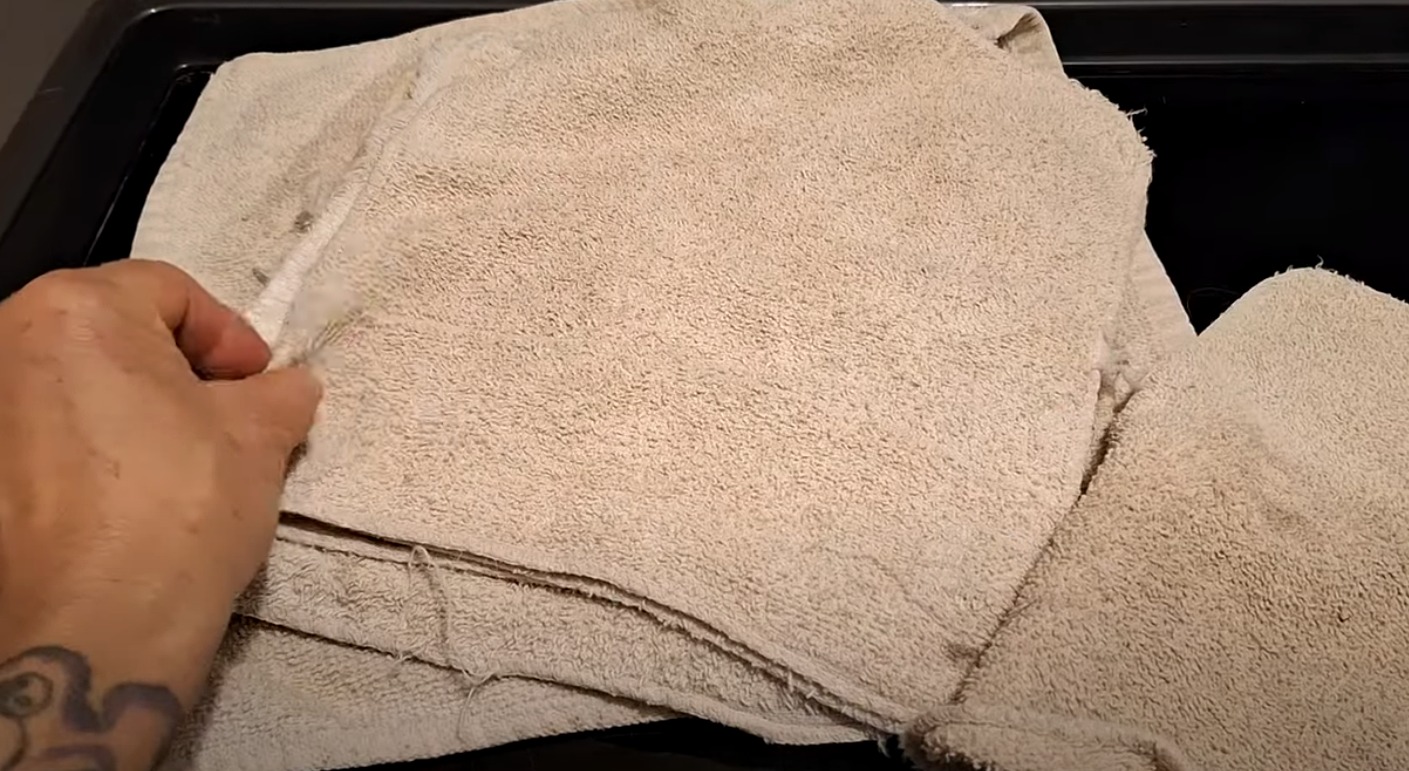
The rags had already been washed with my regular detergent. They were clean, but years of use had left them dingy and stained.
I divided the already-washed rags into three groups and used Borax, washing soda and OxiClean as additional deep-cleaning treatments.
So this experiment does not tell us which product combined with detergent creates the best everyday laundry routine.
It tells us what I observed when I treated similarly dingy, already-laundered cotton rags with each product separately.
That distinction matters.
Current manufacturer directions also confirm some of the nuance behind those comments. ARM & HAMMER recommends washing soda with detergent as a laundry booster, but also provides instructions for using washing soda and water as a pre-soak before laundering. OxiClean similarly describes its Versatile Stain Remover as a stain remover rather than a detergent and provides separate soaking instructions before normal laundering.
How I set up the test
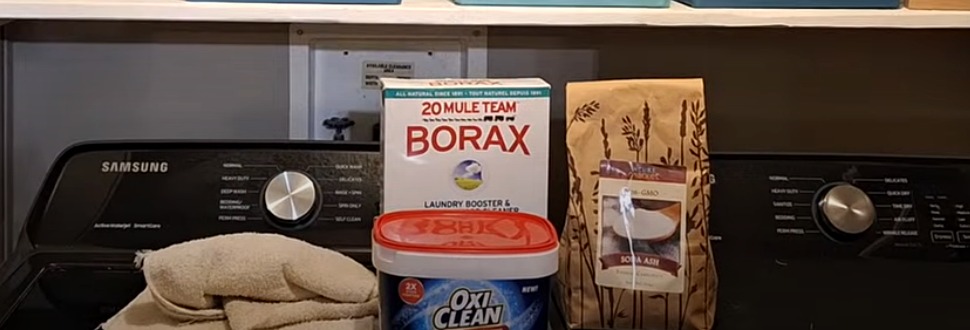
I tested Borax, washing soda and OxiClean on similarly dingy 100% cotton rags.
I started with six 100% cotton rags.
All six had been washed and dried together, and I tried to choose rags with roughly the same yellowish-gray appearance. I deliberately removed any that were exceptionally white or exceptionally stained.
Then I divided them into three groups of two.
I tried to keep as many variables consistent as reasonably possible:
- The same stainless-steel pot
- Two similar rags per test
- Approximately one gallon of water
- 1/4 cup of each cleaning product
- 30 minutes of treatment
- Periodic stirring/agitation
- Thorough rinsing afterward
- Line drying
Was this a controlled laboratory experiment?
Absolutely not.
But it was good enough to answer the question I actually cared about: What would happen in my house, with my rags and my water?
And my water is worth mentioning.
We have very hard, alkaline water. Water chemistry can affect how cleaning products perform, so your results may be different from mine.
Test #1: Borax
I started with Borax.
I added 1/4 cup to approximately one gallon of water with two of the cotton rags and treated them for 30 minutes, periodically stirring the rags.
Afterward, I removed them, rinsed them thoroughly and hung them outside to dry.
Borax certainly did something.
But once all three sets of rags were dry and I could compare them side by side, I didn’t see enough difference from the Borax treatment to convince me that I needed to keep another product on my laundry-room shelf specifically for these rags.
That doesn’t mean Borax doesn’t work.
20 Mule Team markets Borax as a laundry detergent booster and multipurpose cleaner, and identifies its ingredient as sodium tetraborate.
It simply wasn’t the standout in my particular experiment.
Test #2: Washing soda
For the second test, I actually used soda ash that I already had on hand rather than buying another box.
Soda ash is sodium carbonate — the same compound used as washing soda. ARM & HAMMER identifies its Super Washing Soda as a sodium-carbonate laundry booster and household cleaner.
Again, I used approximately 1/4 cup with two rags and treated them for 30 minutes.
I wore gloves while handling it. Washing soda is strongly alkaline, so this isn’t something I treat casually just because it’s a familiar old-fashioned cleaning product.
And this test produced the most dramatic-looking result.
The water was filthy.
Of all three treatments, the washing-soda water was by far the darkest.
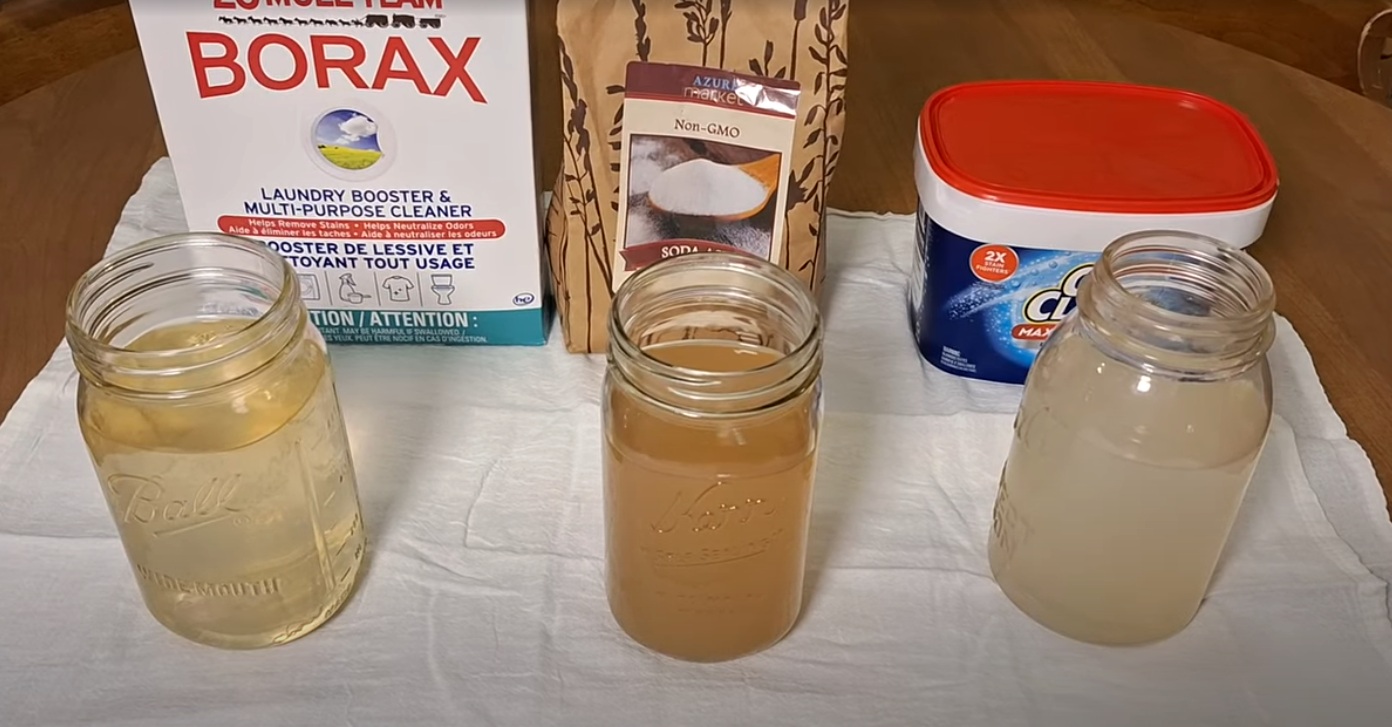
The washing soda produced by far the darkest treatment water, but that didn’t translate into the brightest-looking rag.
At first glance, I thought we had our winner.
Surely the product that pulled the most visible grime into the water would produce the whitest rag.
Except…
Darker water didn’t mean a brighter rag
This was probably the most interesting part of the entire experiment.
When I compared the dirty water from the three treatments, washing soda looked dramatically more effective.
But when the actual rags dried, that wasn’t what I saw.
The washing-soda rag wasn’t the brightest.
That doesn’t mean the dark water was meaningless. Something clearly ended up in that water. But it reminded me not to use dramatic-looking dirty water as proof that one cleaning method necessarily cleaned the fabric better.
Based on what I saw, washing soda is something I’d still consider for occasional deep cleaning or laundry stripping.
ARM & HAMMER also specifically recommends Super Washing Soda as a pre-soak for set-in stains and as a booster used alongside normal laundry detergent. For hard water, the manufacturer recommends a larger amount when using it in the wash.
Given our very hard water, that’s especially interesting to me.
Test #3: OxiClean
OxiClean was the third test — and there’s something important I would change if I repeated this experiment today.
When I made the video, I did not bring the OxiClean mixture to a rolling boil. Based on the information I had found at the time, I kept the water around 200°F, or approximately 90°C.
I added the rags first and then the OxiClean, using roughly 1/4 cup again.
And it immediately became obvious that this product behaved very differently.
It foamed. A lot.
My pot came uncomfortably close to overflowing.
After 30 minutes, I removed the rags, rinsed them thoroughly and hung them out to dry with the others.
Interestingly, the water from the OxiClean treatment was the lightest-looking of the three.
But when I looked at the dry rags side by side?
To my eyes, the OxiClean-treated rag looked the brightest.
That surprised me.
One thing I would do differently now
I would not heat OxiClean this way again.
Current OxiClean instructions specifically say not to heat or boil solutions made with its powder laundry boosters. For OxiClean Versatile Stain Remover, the company recommends dissolving the product in the warmest water appropriate for the fabric, soaking heavily soiled items for up to six hours, and then washing normally with detergent.
So if I repeated this experiment today, I would follow the current package directions and test OxiClean as a soak instead.
That’s one benefit of revisiting an old experiment: sometimes you learn something you’d do differently the next time.
So which one worked best?
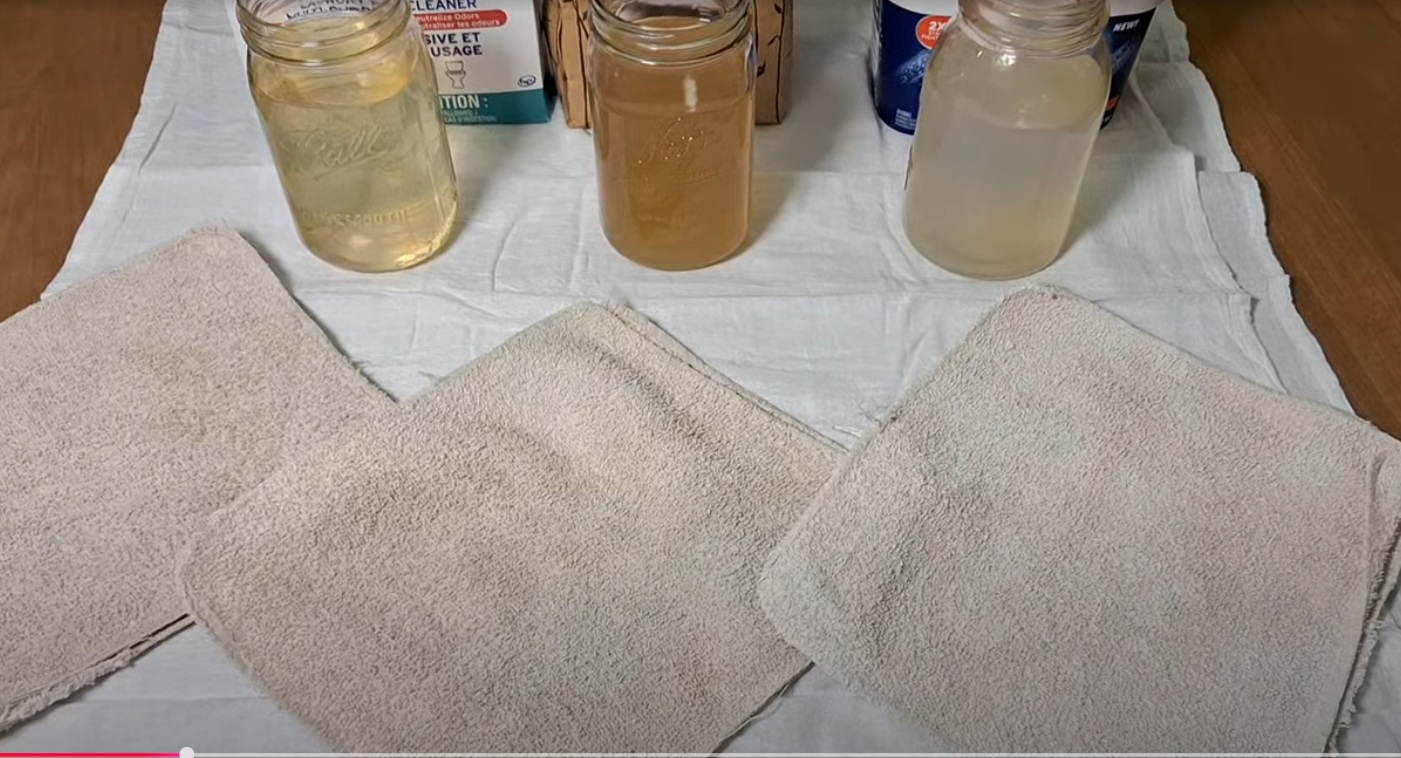
The final results from my experiment. From left to right: Borax, washing soda and OxiClean. To my eyes, the OxiClean-treated rag looked brightest.
If we’re talking strictly about how the rags looked after my experiment, OxiClean produced the brightest-looking rag to my eyes.
But I wouldn’t turn that observation into a universal declaration that OxiClean is “better” than Borax or washing soda.
These aren’t identical products.
They work differently, and their performance can be affected by the fabric, type of soil or stain, water chemistry, concentration, temperature and how they’re being used.
My takeaway was more practical:
| Product | What I observed | My takeaway |
|---|---|---|
| Borax | Some improvement, but it didn’t stand out | I didn’t see enough benefit in this test to keep it specifically for my dingy rags |
| Washing soda | By far the darkest treatment water | Worth considering for occasional deep cleaning, particularly with our hard water |
| OxiClean | Lightest-looking treatment water, but brightest-looking rag | My preference of the three for whitening these particular cotton rags |
And perhaps the biggest surprise was this:
The product that produced the dirtiest-looking water did not produce the brightest-looking rag.
What’s the difference between Borax, washing soda and OxiClean?
Although they’re often discussed together as laundry additives, they’re not interchangeable.
Borax is sodium tetraborate, a naturally occurring mineral compound commonly sold as a laundry booster and multipurpose household cleaner.
Washing soda is sodium carbonate. It is sold as a detergent booster and household cleaner and can also be used in a pre-soak for certain washable fabrics.
OxiClean Versatile Stain Remover is an oxygen-based stain remover rather than a detergent. According to OxiClean, its formulation includes sodium percarbonate, sodium carbonate, surfactants and polymer. When added to water, the product releases oxygen as part of its stain-removing action.
So while all three may occupy space in the laundry aisle, they’re not simply three brands of the same thing.
A few important safety notes
This is also where I’m going to repeat something from the original experiment:
My rags are 100% cotton.
I would not take this experiment and blindly reproduce it with whatever fabric happens to be sitting in your laundry basket.
Follow the care label on your fabric and the current directions for whatever cleaning product you’re using.
OxiClean, for example, currently says its Versatile Stain Remover should not be used on wool, wool blends, silk, silk blends, leather or dry-clean-only fabrics, and its solution should not be heated, boiled or stored in a sealed container.
ARM & HAMMER recommends gloves when making its washing-soda pretreatment paste and says to test fabric for colorfastness before pretreating.
20 Mule Team says Borax should be used as directed, kept away from the eyes, not ingested, and kept out of reach of children and pets.
And don’t improvise by combining household cleaning products unless the manufacturers specifically say they can be used together.
Old-fashioned doesn’t automatically mean harmless.
Would I still choose OxiClean?
For these particular old cotton rags, yes.
If I were trying to brighten them again today, OxiClean would be the first of these three products I’d reach for.
But I’d use it differently.
I’d buy the Free version without fragrance or dyes, because I didn’t particularly like the fragrance of the original product I tested. OxiClean currently sells its Versatile Stain Remover in both regular and Free versions.
And I’d follow the current soaking directions rather than heating it on the stove.
Washing soda still interests me, especially because we have such hard water. And Borax clearly has uses beyond this one experiment.
But that’s the fun part of actually testing things.
Sometimes the answer isn’t:
This product works and that one doesn’t.
Sometimes the answer is:
Well. That wasn’t what I expected.
And now I have another question.
How would plain old baking soda — the product I used in my original boiled-rag experiment — compare directly with washing soda?
That may have to be the next test.


Leave A Reply