
An afternoon of homemade sauce, old kitchen treasures, and putting the garden harvest to good use.
There is something especially satisfying about making a pot of spaghetti sauce from tomatoes you’ve grown yourself.
Not that I always have the time—or the inclination—to turn freshly picked tomatoes into sauce right away.
Some days there are animals to feed, chores to finish, and a dozen other things that need my attention. And sometimes the tomatoes are ripening faster than I can possibly use them.
That’s why I’ve become such a fan of freezing tomatoes.
This year, I tucked away several batches of heirloom tomatoes as they ripened, knowing I could make sauce later when I had a little more time.
And when I finally pulled out five pounds of those frozen tomatoes to make marinara, I also decided it was time to try a couple of old kitchen tools I’d owned for nearly ten years.
As it turns out, one of them was worth the wait.
My Favorite Trick for Preserving Garden Tomatoes
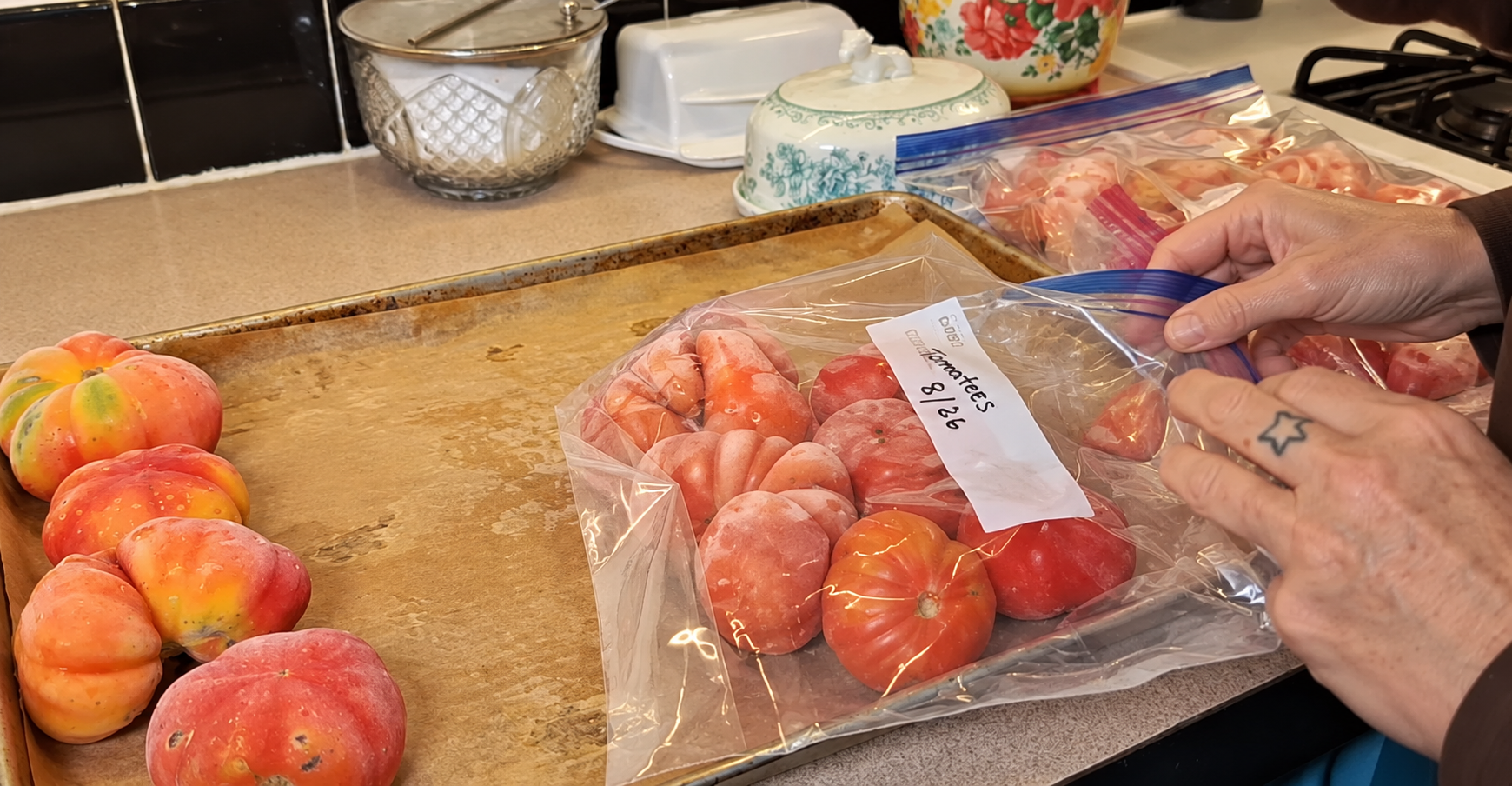
Freezing ripe tomatoes whole lets me preserve the harvest now and make homemade marinara when I have more time. Once thawed, the skins slip right off!
One of the easiest ways I’ve found to preserve tomatoes is to freeze them whole.
No blanching. No standing over a pot of boiling water. No peeling dozens of tomatoes while trying to get everything done before dinner.
I simply wash the ripe tomatoes, remove the stems and any damaged areas, dry them, and freeze them in freezer-safe bags or containers.
When I’m ready to use them, I thaw them in the refrigerator.
Here’s the wonderful part: once frozen tomatoes thaw, their skins slip off with very little effort.
Freezing also softens the flesh considerably, which makes the tomatoes easy to process into sauce.
They do release quite a bit of liquid as they thaw. That’s perfectly normal. I save the juices because they’re full of tomato flavor, although the extra moisture means the finished sauce may need a little longer to reduce.
For this batch, I started with five pounds of previously frozen heirloom tomatoes.
Two Old Food Mills and a $25 Yard-Sale Find
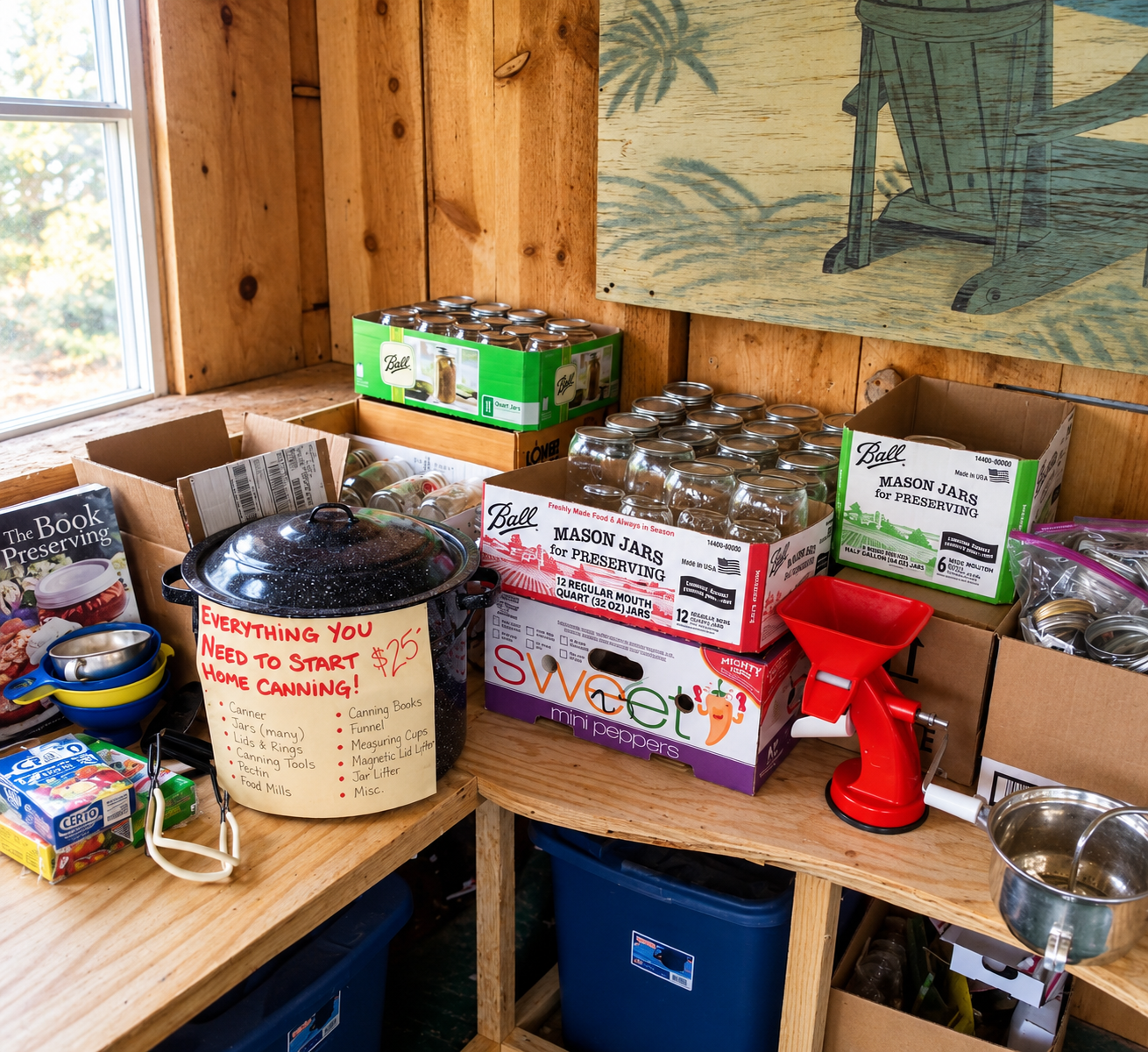
The original $25 yard-sale haul! More than 100 canning jars, a water-bath canner, food mills, and other preserving supplies. That little red tomato strainer would sit unused for ten years before finally helping me make homemade marinara.
Nearly ten years ago, one of our neighbors was preparing to move and held a yard sale.
He was interested in permaculture and growing his own food, and he’d accumulated an impressive collection of food-preservation supplies.
For just $25, I came home with more than a hundred canning jars, a water-bath canner, lids, rings, pectin, and two food mills.
I’ve used almost everything from that purchase over the years.
Everything, that is, except the food mills.
The first was a traditional stainless steel food mill with a hand crank and perforated bottom.
I thought it would be perfect for processing my thawed tomatoes.
Unfortunately, the tomatoes seemed more interested in taking a ride than becoming sauce.
I turned the crank forward and backward, but the soft tomatoes mostly spun around inside the mill. I got some juice, but very little of the thicker pulp I wanted.
Fortunately, I had another option.
The Old Italian Tomato Strainer That Finally Earned Its Keep
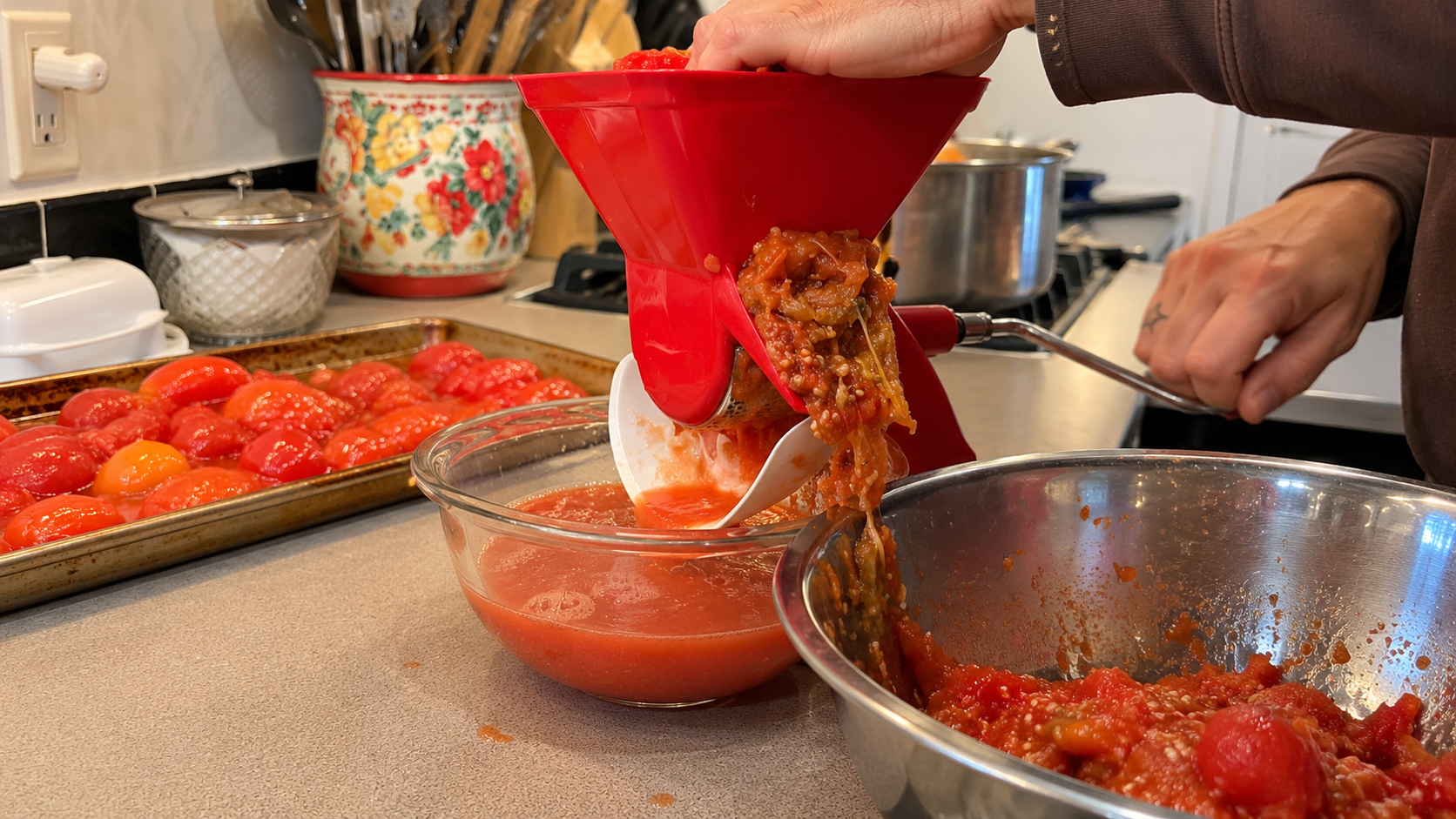
After sitting unused for ten years, my old Italian tomato strainer finally got its chance! The red chute collects the skins and seeds while the smooth tomato purée flows into a separate bowl.
The second machine was a red, hand-cranked tomato strainer called the World Super Velox, made in Italy.
Unlike the traditional food mill, this machine uses an auger to push tomatoes against a perforated screen. The pulp passes through the screen while the skins and seeds are discharged separately.
And what a difference!
The red strainer crushed the tomatoes beautifully.
I even ran the leftover skins and seeds through a few more times to extract as much pulp as possible. The entire process took only a few minutes.
After nearly ten years in the cupboard, I finally understood why someone would want one of these machines.
My five pounds of thawed tomatoes produced more than eight cups of tomato purée, although it was fairly thin because of the moisture released during freezing.
That wasn’t a problem. I was making marinara, and I could simply let the sauce simmer until it reached the consistency I wanted.
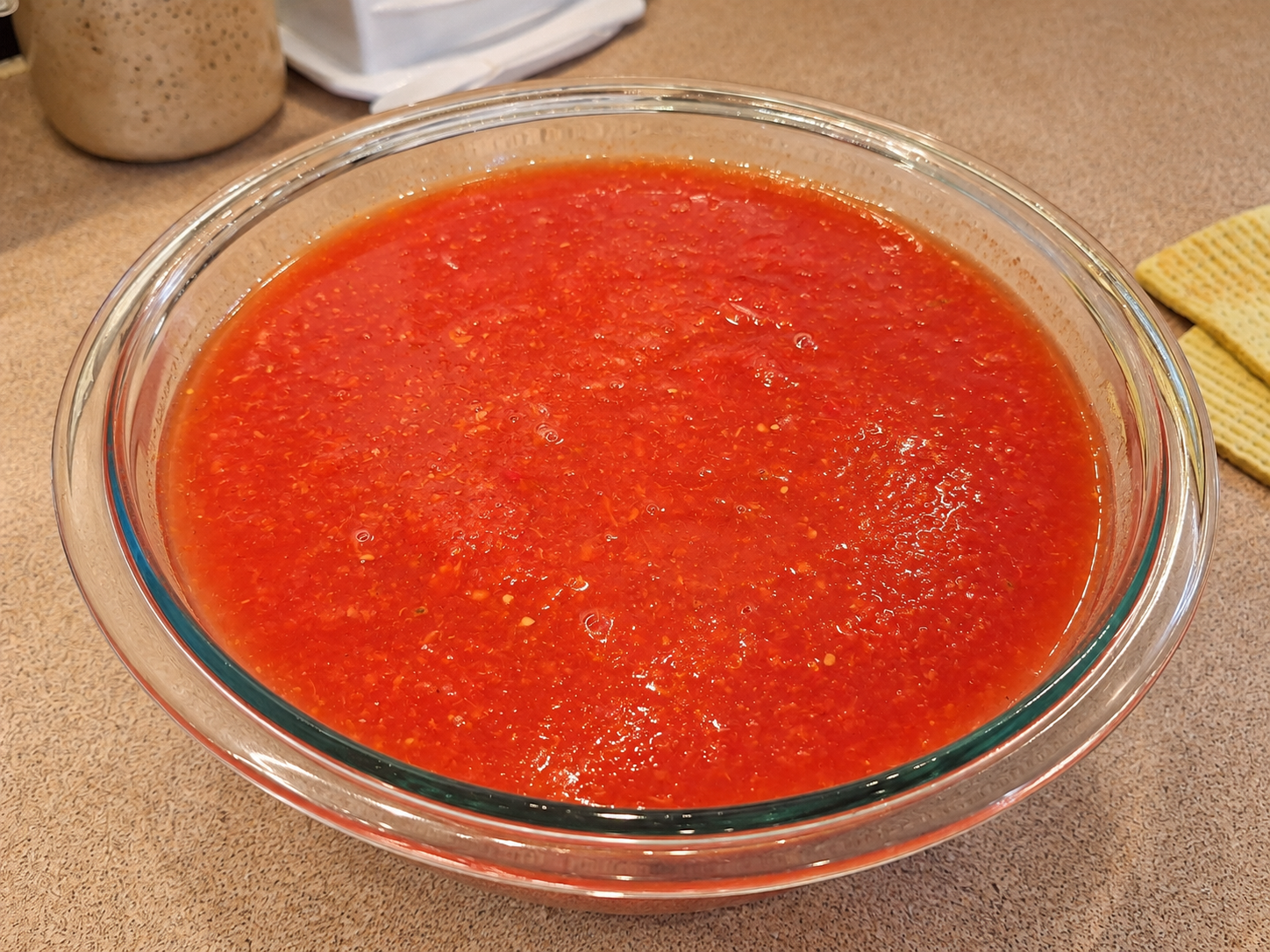
Five pounds of thawed garden tomatoes produced a surprisingly generous amount of purée! It was quite thin at first, but simmering would concentrate all that fresh tomato flavor.
A Recipe from an Old Favorite Cookbook
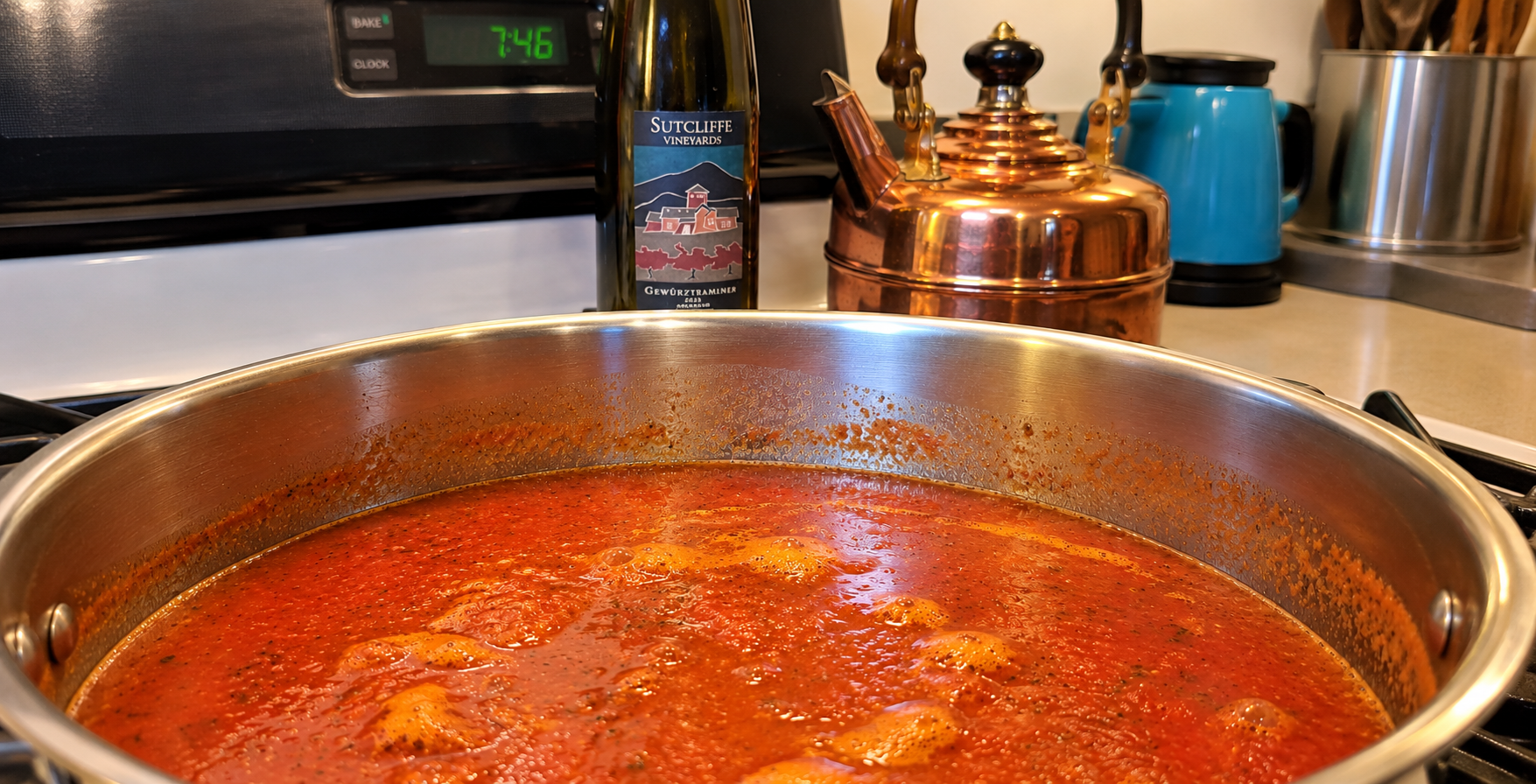
Garden-grown tomatoes simmering into homemade marinara, with a splash of locally made Sutcliffe Vineyards wine.
Another little treasure came out of the cupboard that afternoon.
Years ago, I found a copy of Food to Live By: The Earthbound Farm Organic Cookbook by Myra Goodman at a farmers market for about a dollar.
It’s a well-loved cookbook, and the recipe that inspired today’s sauce is called Farm Stand Marinara Sauce.
I love that the original recipe was written with the idea of making a big batch of sauce to keep in the freezer.
I used it as the starting point for my marinara, with a few changes to accommodate the ingredients I had on hand and the tomatoes I’d already frozen and processed.
And what I especially loved was realizing how many of those ingredients had come from right here in our little corner of Colorado.
The tomatoes and basil came from our garden.
The onion came from our neighbors next door.
And the wine came from Sutcliffe Vineyards, just down the canyon.
The recipe called for dry red wine, but I had a dry Colorado Gewürztraminer, so that’s what I used.
There’s something lovely about making dinner with ingredients that have a story behind them.
Homemade Garden Tomato Marinara Sauce
Ingredients
Method
- Prepare the tomatoes. Thaw the frozen tomatoes in the refrigerator. Remove their skins, which should slip off easily. Save the tomato flesh and juices.
- Process the tomatoes. Pass the thawed tomatoes through a tomato strainer to separate the pulp from the seeds and any remaining skins. If you don't have a strainer, you can crush or blend the peeled tomatoes instead. The finished sauce will simply have a different texture.
- Prepare the vegetables. Finely chop the garlic, carrot, and onion by hand or with a food processor.
- Cook the aromatics. Warm the olive oil in a large, heavy pot over medium-low heat. Add the chopped vegetables and cook, stirring occasionally, until softened without browning, approximately 10–12 minutes.
- Add the wine. Pour in the wine, stir to loosen anything sticking to the bottom of the pot, and simmer for about 3 minutes.
- Add the tomatoes and herbs. Stir in the tomato purée, basil, oregano, and thyme.
- Simmer the sauce. Cook gently, uncovered, stirring occasionally. Begin checking the flavor and consistency after about 35–45 minutes. If your tomatoes were especially watery after thawing, continue reducing until the sauce is as thick as you like.
- Season to taste. Add the salt and pepper. Taste the sauce and add a little sugar only if you think the acidity needs balancing.
- Serve or freeze. Enjoy immediately, or cool the sauce promptly and portion it into freezer-safe containers. Leave suitable headspace for expansion and label each container with the date.
Notes
Even the Leftovers Had a Purpose
After processing the tomatoes, I had a small pile of skins, seeds, and fibrous bits left over.
Rather than throwing everything away, I decided to put those scraps to work, too.
I saved a few seeds to see whether they might germinate next spring. Since the tomatoes had been frozen, I don’t know how viable they’ll be, but it’s an experiment worth trying.
Some of the scraps went into our worm farm, where they’ll eventually help produce castings for the garden.
And the chickens were more than happy to help with the rest.
Of course, Albert, our turkey, got his share, too.
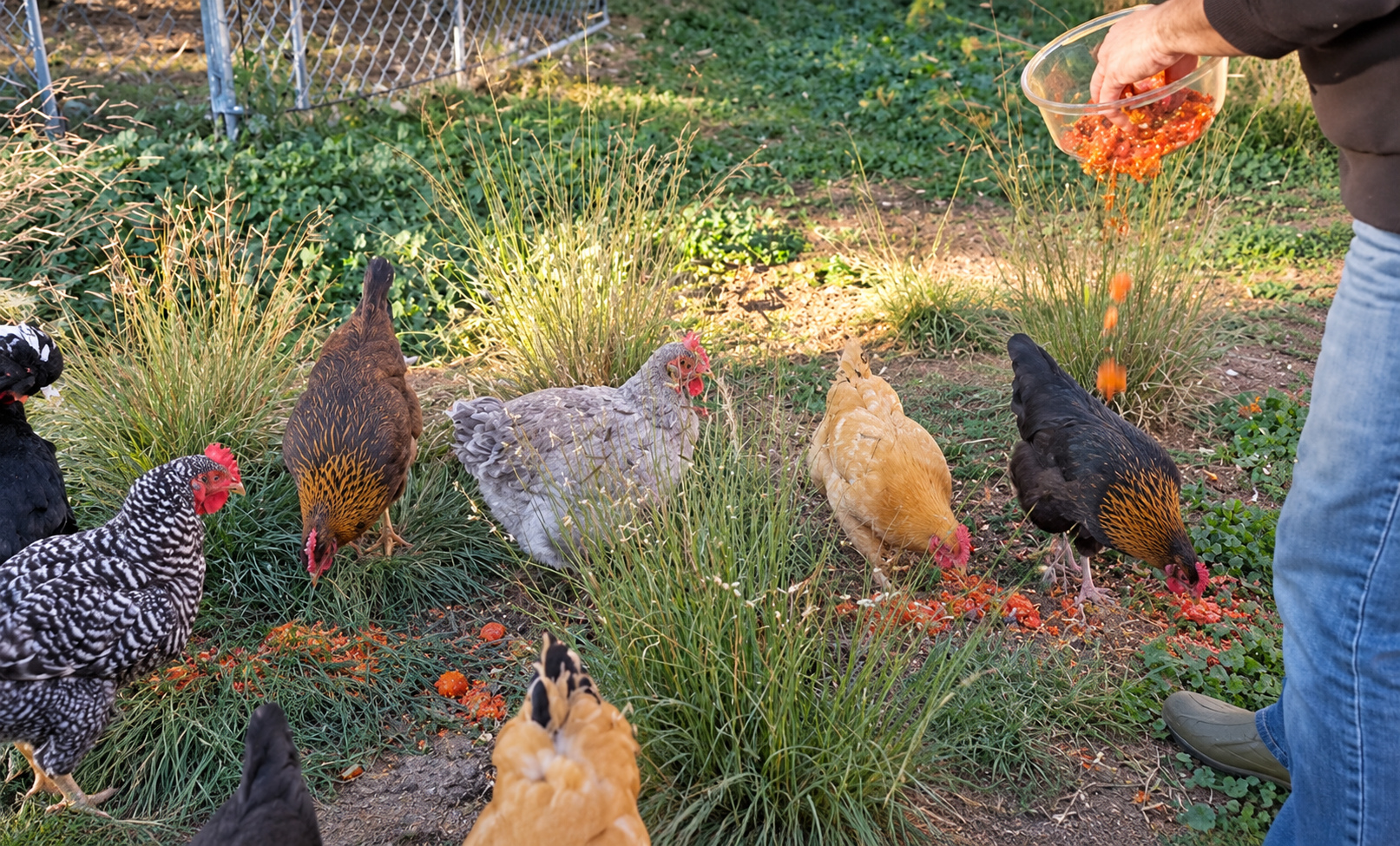
Even the chickens got to enjoy our marinara-making day! The leftover tomato skins and seeds made a welcome treat.
A Little Homemade Goodness for the Freezer
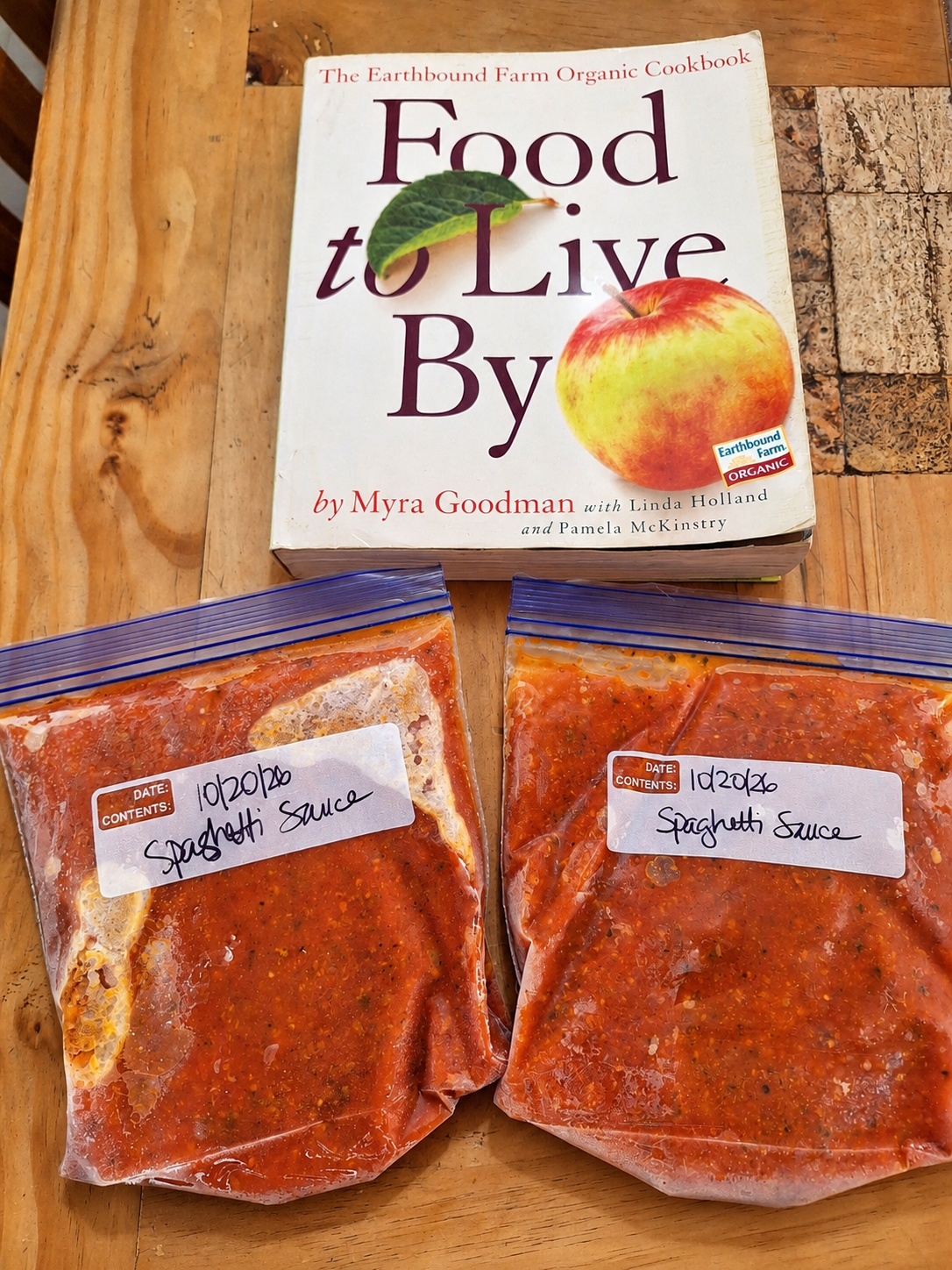
Five pounds of homegrown tomatoes, a favorite recipe from a $1 cookbook, and two bags of homemade marinara ready for the freezer.
What started as a simple afternoon of making spaghetti sauce turned into one of those projects that reminded me why I enjoy growing and preserving our own food.
I finally learned how to use an old Italian tomato strainer that had been sitting in a cupboard for almost a decade.
I put five pounds of our garden tomatoes to good use.
I pulled out a favorite old cookbook, used ingredients from our garden and our neighbors, and made a batch of homemade marinara to enjoy later.
And even the tomato scraps found a purpose.
Sometimes the most satisfying projects aren’t particularly complicated.
They’re simply a matter of using what you already have, learning something along the way, and putting a little goodness away for another day.
Watch the Video
Come spend an afternoon in the kitchen with me at Mutiny Ranch! You’ll see both food mills in action, how I processed the frozen tomatoes, and how the sauce came together.
Kitchen Tools & Resources
- New Version of the World Super Velox: https://www.growitalian.com/products/rigamonti-velox-tomato-press-with-round-bowl-r-67
- Freezer-safe food storage containers: https://geni.us/sxv2pA (Amazon)
- Food to Live By: The Earthbound Farm Organic Cookbook: https://geni.us/kvnm (Amazon)
Some links may be affiliate links. If you purchase through them, I may earn a small commission at no additional cost to you. As an Amazon Associate, I earn from qualifying purchases.


Leave A Reply