
Every fall, as the weather begins to change here in southwestern Colorado, there’s one chore I know I need to tackle: getting our chicken runs ready for winter.
Our summers are hot and sunny, but winter brings cold temperatures, snow, rain, and plenty of mud. And while our chickens don’t seem particularly bothered by chilly weather, nobody enjoys spending their days standing in wet, muddy bedding.
Several years ago, we started using a simple seasonal covering system for our chicken runs. During summer, we use shade cloth to provide relief from the intense sunshine. When fall arrives, I remove the shade cloth and replace it with clear plastic sheeting.
We’ve been doing this for five years now, and it’s become one of those practical little systems that makes life on the ranch easier.
Here’s how we do it, what materials we use, and what we’ve learned along the way.
Why We Cover Our Chicken Runs in Winter
Our goal isn’t to make the runs warm or completely enclosed. It’s to keep as much rain and snow off the ground as possible while still providing plenty of fresh air.
Chickens need a dry, well-ventilated place to spend their time. When rain and melting snow soak the ground, bedding becomes muddy, chores get messier, and it’s harder to maintain a clean environment.
Covering our runs has made a noticeable difference.
Even when the surrounding ground is wet and muddy, the protected areas give our chickens somewhere drier to scratch, explore, and spend their days.
And I appreciate not having to slog through quite so much mud when tending to them!
Switching From Summer Shade Cloth to Winter Plastic
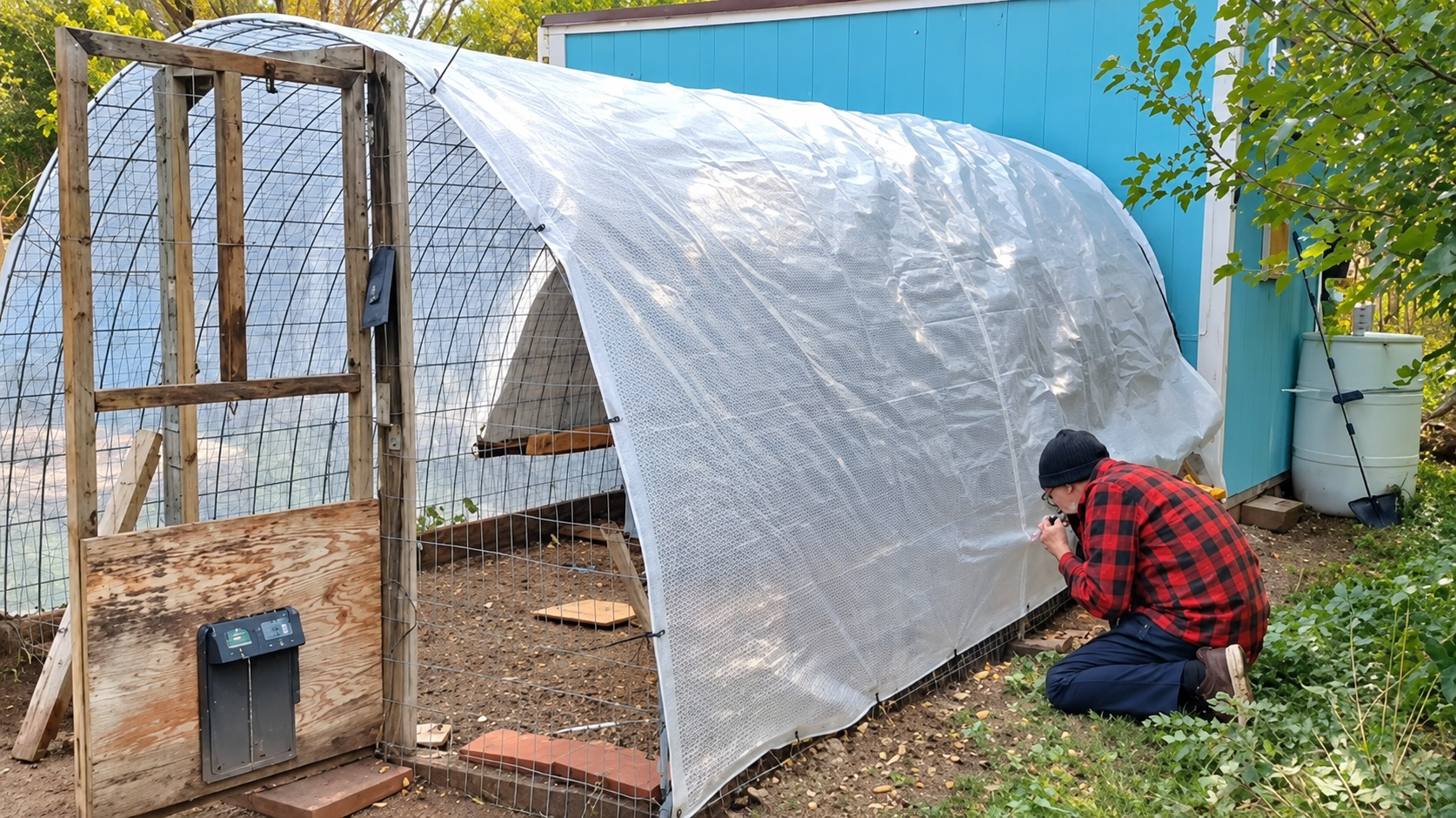
Securing clear plastic sheeting to our chicken run as part of our annual winter preparations.
One of my favorite things about this setup is that we’re using the same structures year-round.
During our hot Colorado summers, shade cloth helps provide shelter from the sun.
In the fall, I remove the shade cloth and replace it with clear plastic sheeting. The plastic helps block rain and snow while allowing daylight into the run.
It’s a relatively simple seasonal change, and after doing it for several years, I’ve developed a routine that works well for us.
The Plastic Sheeting We Use
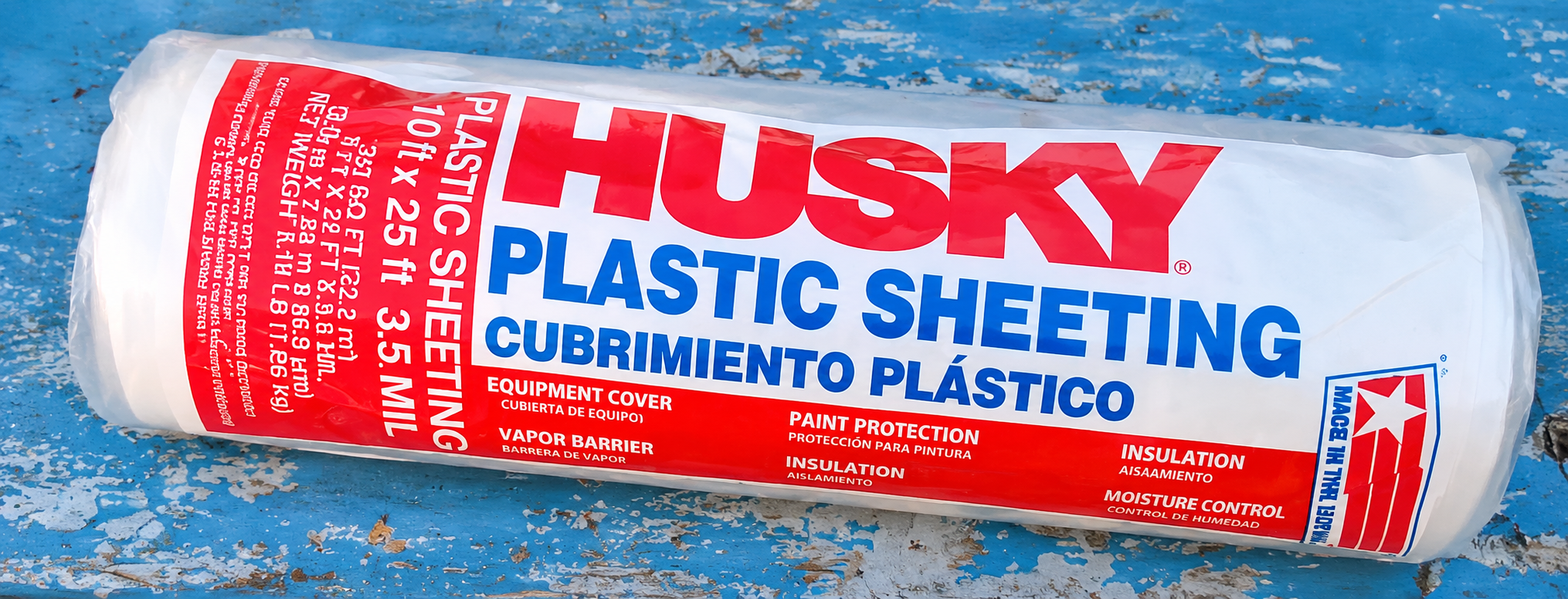
I use Husky 3.5 mil clear plastic sheeting in a 10 × 25-foot roll to help keep our chicken runs dry during winter.
For our chicken runs, I’ve used Husky brand clear plastic sheeting in a 10-by-25-foot roll, 3.5 mil thick.
Husky also offers other dimensions and thicker options, including 4 mil and 6 mil sheeting.
I’ve had good results with the 3.5 mil plastic on our setup, although the best thickness for another chicken run will depend on its construction, exposure to wind, and local weather conditions.
Thicker sheeting may offer additional resistance to tearing, but it won’t compensate for inadequate framing or poor fastening.
I also use a Tarpal tarp which is 12mils and should last many years.
How We Attach the Plastic
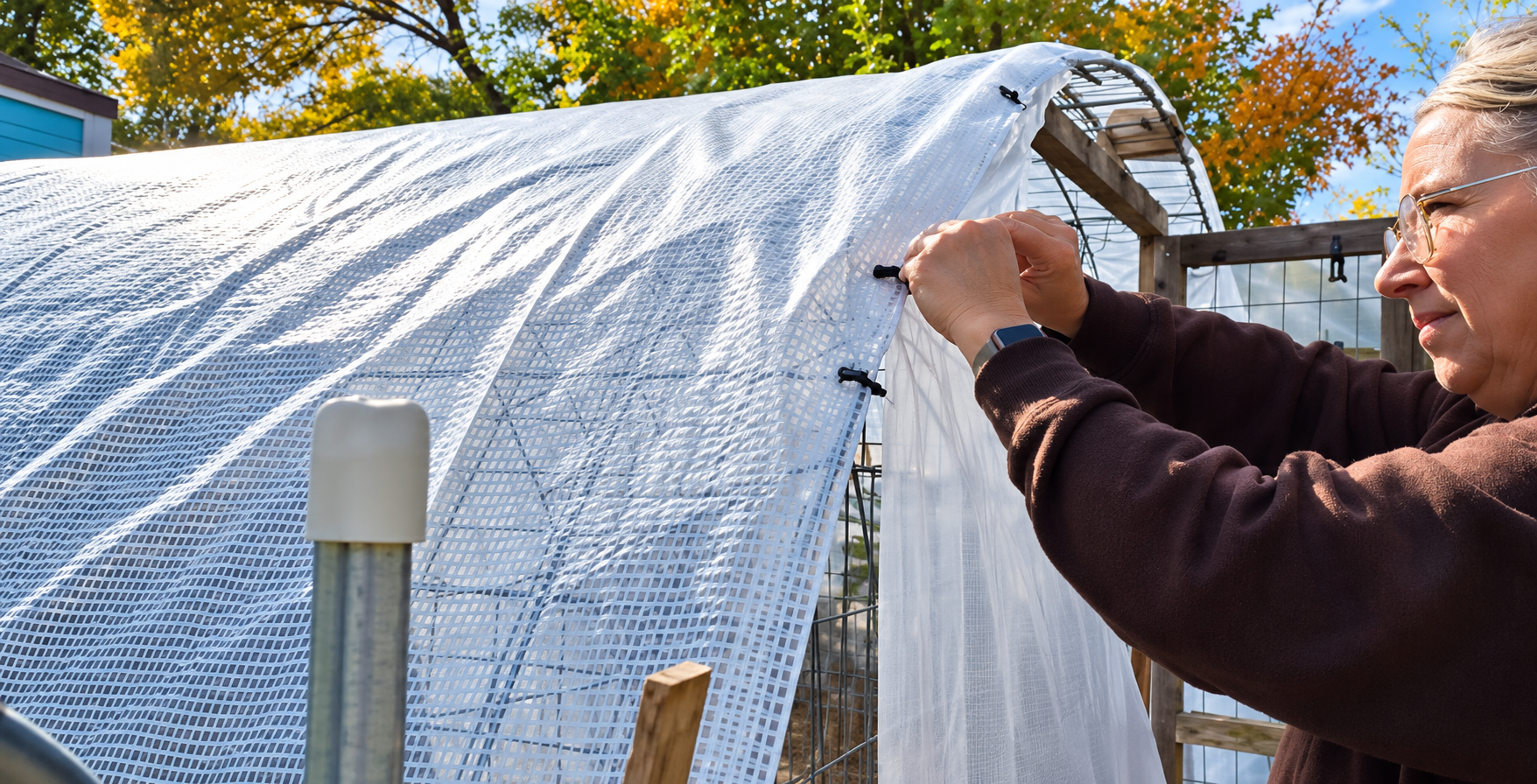
I use removable spring clamps to secure the plastic sheeting to the metal frame of our chicken runs, making seasonal changes easier.
Our chicken runs have both metal and wooden framing, so I use different methods to secure the coverings.
For the metal portions of the frames, I use 2-inch spring clamps. These are the same type of clamps commonly sold for woodworking and photography backdrops.
They’re handy because I can remove and reposition them without making permanent changes to the metal framework.
I use these clips for both our summer shade cloth and winter plastic.
See the 2-inch spring clamps I use on our chicken runs
For wooden sections, including around the doorway, I secure the plastic with staples.
I also check that the covering is properly secured and that there aren’t loose sections that could flap excessively in the wind.
How Long Does the Plastic Last?
This is one of the things I appreciate most about our setup: I don’t necessarily have to purchase new plastic every year.
I’ve reused the same 3.5 mil plastic sheeting on our chicken run for three winters in a row.
Eventually, I replace it when it becomes too cloudy or develops too many holes.
And the holes aren’t always caused by winter weather!
Our cats occasionally decide that climbing the chicken runs is a perfectly reasonable activity. Unfortunately, their claws don’t always agree with the plastic sheeting.
So while the plastic has held up well for us, it does occasionally fall victim to the other residents of Mutiny Ranch.
If your plastic is still in good condition when spring arrives, you may be able to remove it, store it, and use it again the following winter.
Why Ventilation Still Matters
It’s tempting to think that sealing a chicken run completely would provide the best winter protection, but that isn’t what we’re trying to accomplish.
Our runs are sheltered, not airtight.
Fresh air needs to circulate to help prevent condensation and excessive moisture buildup. Poor ventilation can contribute to damp conditions, even when rain and snow aren’t getting inside.
We leave openings that allow air to move through the covered areas.
The goal is a balance: protection from precipitation without trapping damp, stale air around the chickens.
This is especially important if you’re adapting a similar setup for your own flock.
What About Snow and Wind?
Every chicken run is different, and so is every winter climate.
Clear plastic sheeting provides a barrier against precipitation, but it isn’t structural support.
The framework underneath needs to be strong enough for the conditions it may encounter. Snow accumulation, high winds, and loose fasteners can all damage a covered run.
We monitor our coverings throughout winter and make repairs when needed.
If you live somewhere with particularly heavy snowfall or strong winds, you may need a different covering thickness, attachment method, or structural design.
Does Covering the Run Really Help With Mud?
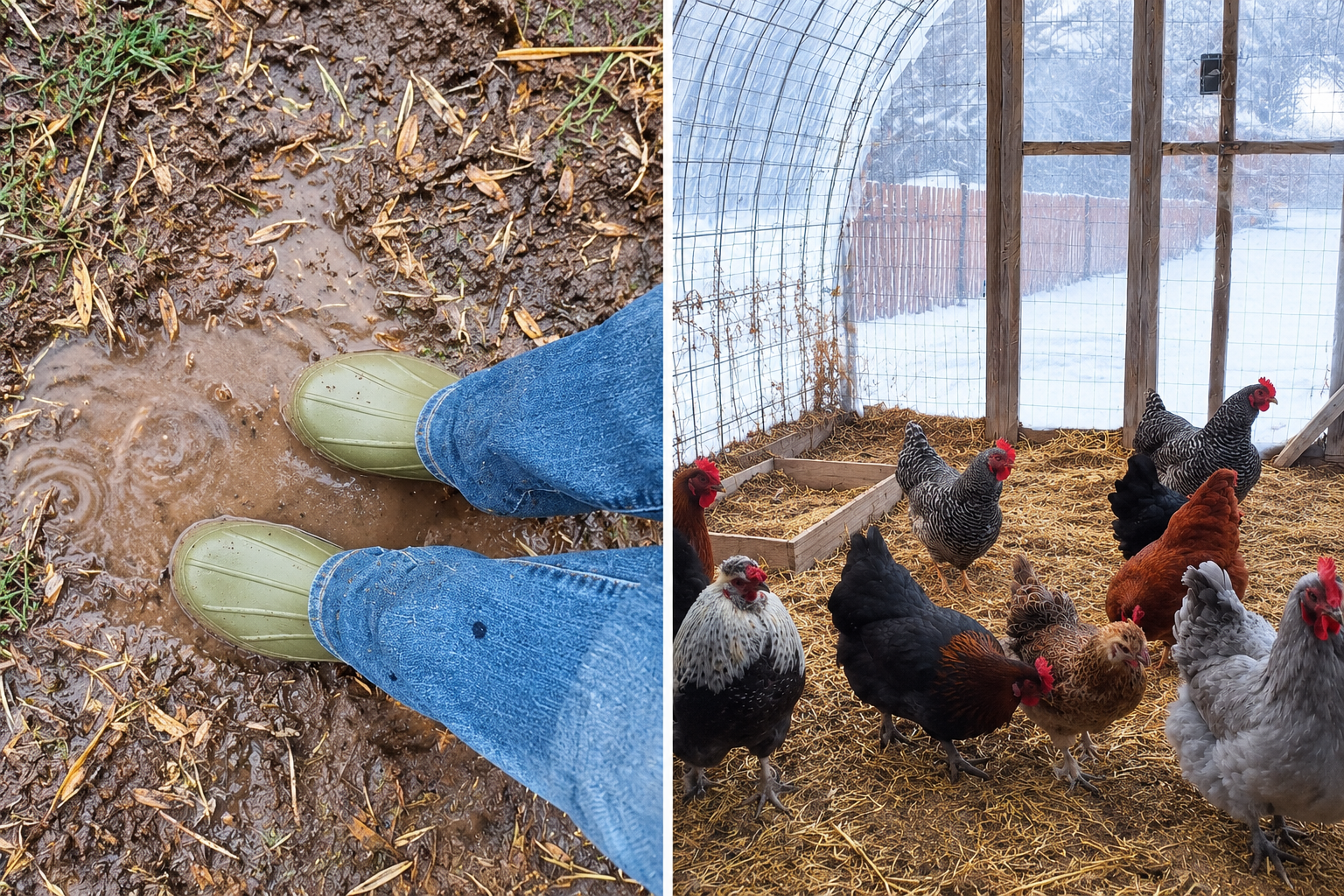
Muddy boots or even snow outside, dry bedding inside! Covering our chicken runs with clear plastic helps protect the flock from winter rain and snow.
For us, absolutely.
One of the clearest demonstrations comes after wet weather.
I can walk through muddy areas of the ranch and then step into the covered chicken run, where the ground and bedding are noticeably drier.
Of course, this doesn’t mean every inch of our property stays dry. Far from it!
But keeping precipitation off the run makes a real difference in the areas where our chickens spend much of their time.
It also means less soggy bedding to deal with and a more pleasant place for the flock to scratch around.
Watch How We Winterize Our Chicken Runs
If you’d like to see the process rather than just read about it, I filmed our fall chicken-run winterizing project.
In the video, I remove the summer shade cloth, install the clear plastic, secure it around the doorway, and show the difference between the muddy conditions outside and the sheltered run.
Watch our chicken-run winterizing video on YouTube
Five Years Later, We’re Still Using This System
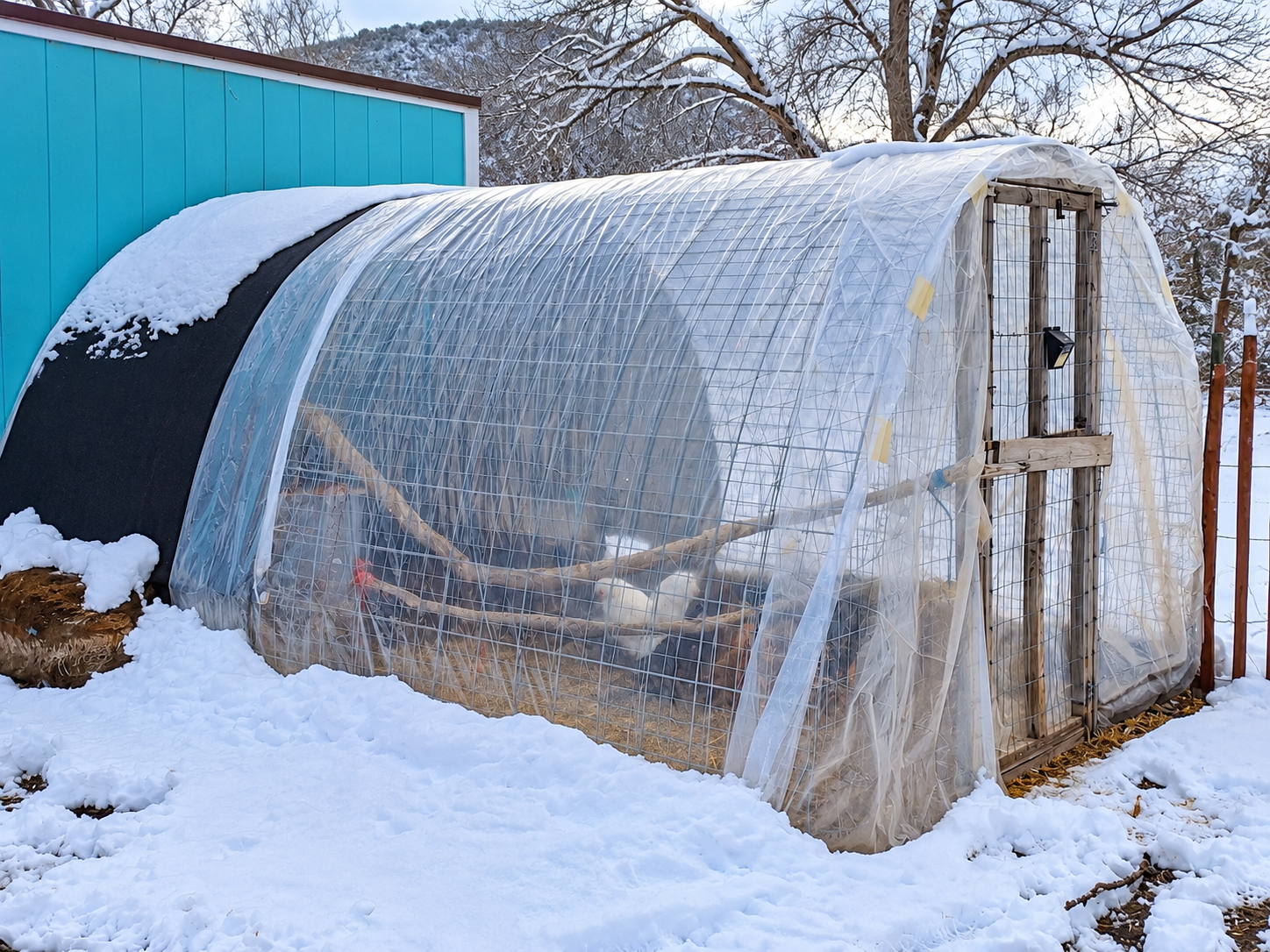
Our plastic-covered chicken run provides a sheltered, drier space for the flock, even when snow covers the ground outside.
After five years, this remains one of my favorite practical solutions for keeping our chicken runs more comfortable during winter.
It doesn’t require an elaborate renovation or a completely separate winter enclosure. We simply adapt the structures we already have to suit the season.
There are always things that need fixing, replacing, or improving around a homestead. And sometimes the most valuable solutions aren’t the expensive or complicated ones.
They’re the little systems that quietly make everyday chores easier.
Even if the cats occasionally have other plans.
How do you keep your chicken run dry during winter? Do you use plastic sheeting, a permanent roof, extra bedding, or something entirely different? I’d love to hear what works for your flock!
Disclosure: This post contains affiliate links. If you purchase through these links, I may earn a small commission at no additional cost to you. As an Amazon Associate, I earn from qualifying purchases.


Leave A Reply